Information
Open Saturday, October 24th, 2026, from 10 am – 2 pm
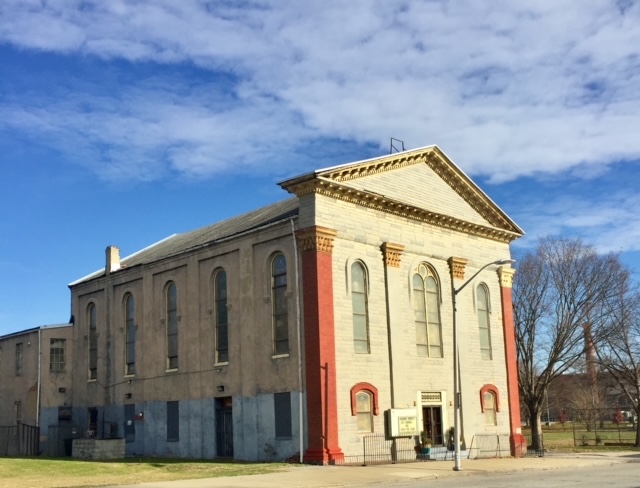
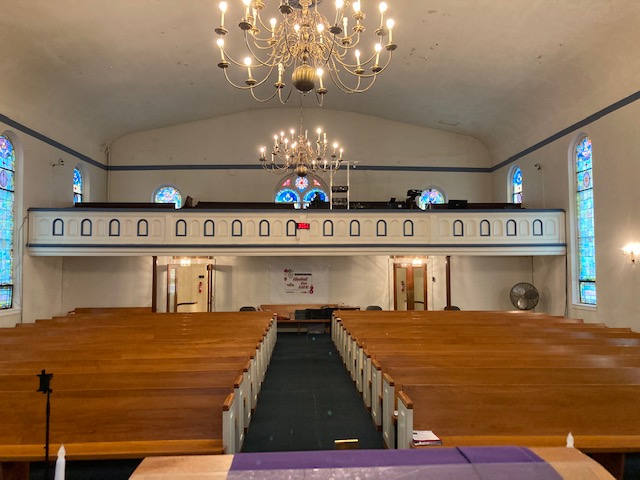
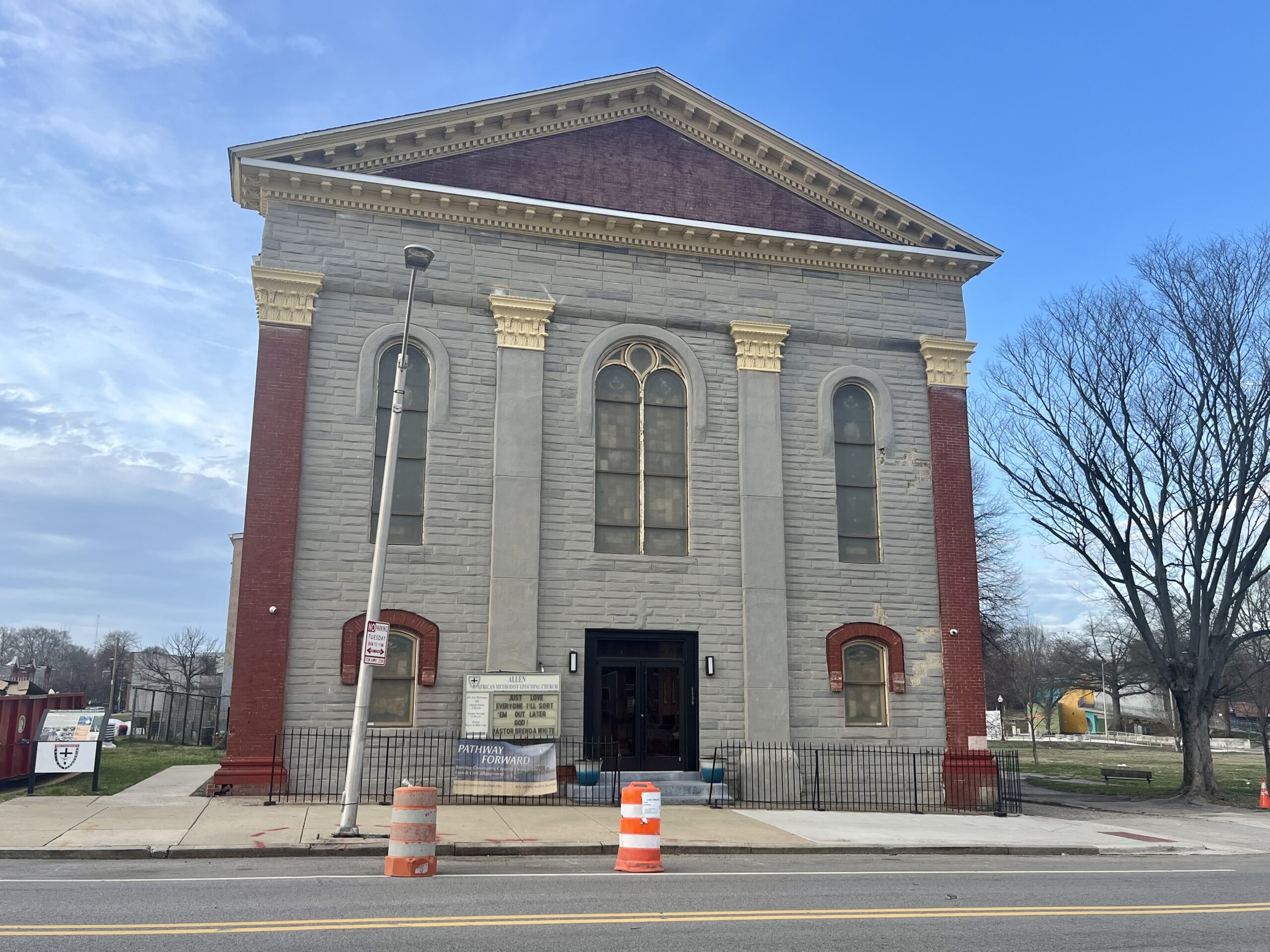
Allen African Methodist Episcopal was erected in approximately 1863, possibly by Northwest Mission Church who owned the property in the 1870s. The block along Lexington St. on which the church stands used to be shared with three residences on the immediate west. A large portion of the block on the west and north was shared with the since-demolished Baltimore School No. 75 (later Mary McLeod Bethune, Baltimore School No. 140, a “Colored School”), a portion of which was built in 1860.
In 1879, St. Paul’s Reformed Church (English) purchased the property from Northwest Mission Church and commenced renovation work. In 1902, Allen AME purchased the property from St. Paul’s Reformed Church (English), who merged with Third Reformed in 1947 as Park Community Church. In 1934, a group of 500 members split away from Allen AME and formed Emmanuel Christian Community Church, leaving only several dozen members to gradually build back the congregation to full strength.
With its long history of community advocacy and service, Allen AME is a mainstay in the Poppleton Community of West Baltimore. The congregation remains active in preserving green space, maintaining its community gardens, addressing illegal dumping, and promoting nutrition, health advocacy, education, and medication management. The church has become a gathering place for residents seeking to help preserve Poppleton, voicing concerns about the protracted large-scale redevelopment of their neighborhood.
Segoins was a Black architect and builder. He attended Hampton Normal and Agricultural Institute (now Hampton University) in the 1910s. His work included the Black Elks Lodge 32 (Brooklyn, NY); Sharp Street Memorial Church’s Community House (Baltimore, MD); 1512 Pennsylvania Ave (Baltimore, MD); 1312 Druid Hill Ave (Baltimore, MD); New Odd Fellows Hall (Baltimore, MD); and Ames Memorial A.M.E. Church (Baltimore, MD).
Research by Jerome C. Gray, Architect
Sources:
- Allen AME Church. Pathway Forward Initiative and Community Programs, April 9, 2025.
- https://www.allenbaltimoremd.org/pathway-forward.
- Diaz, Tristan. “Allen AME – 1130 W Lexington St.” Baltimore Traces (Fall 2023), October 31, 2023.
- Singletary, Betty. Interview by Dontae Phillips. Baltimore Traces (Fall 2023), November 21, 2023.
- White, Brenda. Interview by Dontae Phillips. Baltimore Traces (Fall 2023), November 21, 2023
- https://www.allenbaltimoremd.org/.
- “Purchase of Church Property St. Paul’s Reformed Church” The Baltimore Sun Sat, Aug 23, 1879, Page 4
- Archives of Maryland Online, Session Laws, 1910 Session, Volume 487, Page 1240
- German Marylanders – St. Paul’s (English) Reformed
- Sanborn Map Company, Vol. 2, 1901, Sheet 125
- Sanborn Map Company, Vol. 2, 1914, Sheet 144
- “Arthur M. Segoins”, C. & P. Phone, Madison 7483
- “827 Druid Hill Avenue”, The Afro-American Fri, Nov 02, 1923, Page 8
- “Hampton Builders’ Conference Gave This Pastor Ideas On Church Construction, Ventilation And How To Prevent Leaks And Dampness”, The Afro-American Fri, Feb 16, 1923, Page 9
- “Proposed $150,000 Odd Fellows’ Temple”, The Afro-American Fri, Jul 29, 1921, Page 1”